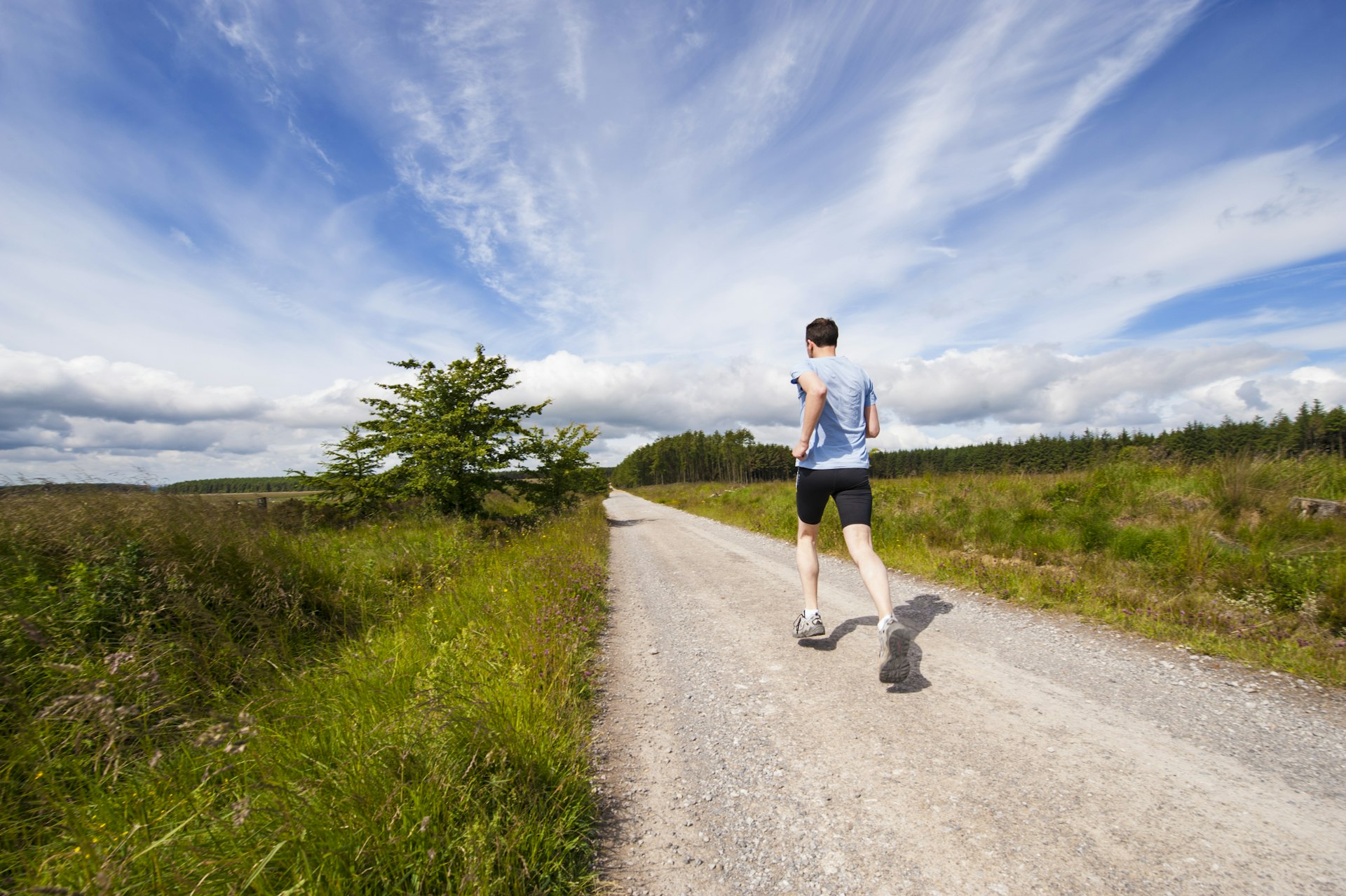
Situational Awareness Training
Awareness is not anxiety. It is a trainable skill that keeps you connected to your environment without draining your energy. Learn the rhythms, protocols, and drills that turn raw alertness into sustainable confidence.
The Scanning Rhythm
Most people think situational awareness means looking around constantly. That approach leads to fatigue and anxiety within minutes. The scanning rhythm is a structured pattern that keeps you informed without overwhelming your cognitive load.
The rhythm follows a simple cycle: Forward (5 seconds) -- Left (2 seconds) -- Forward (5 seconds) -- Right (2 seconds) -- Forward (5 seconds) -- Behind (glance over shoulder). Repeat. This 20-second cycle covers all four directions and becomes automatic within a few runs.
The Headphone Protocol
We are not going to tell you to never wear headphones. We know runners love their music and podcasts. Instead, here is a protocol that lets you listen while maintaining acoustic awareness.
Your ears are a 360-degree sensor that works in the dark. Sounds you might need to hear include: approaching vehicles, footsteps, barking dogs, shouted warnings, and the subtle crunch of gravel that tells you someone is behind you. Removing that sensor entirely is a significant tradeoff.

Pace Modulation as a Safety Tool
Your running pace is not just a fitness metric -- it is a tactical tool. Adjusting your speed based on your environment is a mark of an experienced night runner.
Confidence Pace
Your comfortable, sustainable pace for well-lit, familiar sections. This is where you enjoy the run, settle into rhythm, and let your scan cycle operate on autopilot.
Alert Pace
Slightly faster, head up, scan frequency doubled. Used when transitioning through moderately lit areas, passing groups of people, or running through less familiar sections.
Sprint-Through Pace
Short bursts of high speed through dark stretches or areas that feel uncomfortable. This is not about fitness -- it is about minimizing time in low-confidence zones.
Tactical Stop
Full stop at intersections and before entering new visibility zones. The three-second pause lets you assess the environment, check your scan, and make a conscious decision to proceed.
Intuition Calibration & Decision Speed
Your gut feeling is not magic -- it is your brain processing environmental cues faster than your conscious mind can articulate. Learning to trust (and calibrate) this process is one of the most powerful safety skills you can develop.
Decision speed drills train you to act on your intuition without second-guessing. The principle is simple: if something feels wrong, act first and analyze later. Cross the street, change direction, enter a business, or call someone. The cost of a false alarm is zero. The cost of ignoring a real signal can be enormous.
Awareness Tips
Answers to common questions about staying alert without burning out.
Explore All Pillars
Route Intelligence
Light density, loop design, exit points, timing strategy.
Visual Presence
Reflective geometry, headlamp vs waist light, silhouette awareness.
Situational Awareness
You are here
Emotional Resilience
Hypervigilance fatigue, breath resets, first-night confidence.
Community Safety
Buddy systems, route sharing, trusted route networks.
Sharpen Your Awareness
Design routes that optimize for awareness with our Night Route Builder, or connect with experienced night runners in the Night Crew who can share their awareness techniques.