
Visual Presence Strategy
Being seen is not vanity -- it is survival. Learn the science and strategy of making yourself visible to drivers, cyclists, and other pedestrians without turning yourself into a walking spotlight.

Reflective Geometry
Reflective gear works by bouncing light back toward its source -- typically a car's headlights. But here is what most runners miss: the placement of reflective material matters more than the amount.
Research from road safety studies shows that drivers recognize a human shape fastest when reflective material is placed at the joints -- ankles, knees, wrists, and elbows. This is called "biological motion recognition." When reflective strips move in the natural pattern of human locomotion, a driver's brain processes "person running" in under 200 milliseconds.
Headlamp vs Waist Light
The headlamp-vs-waist-light debate has a clear answer: it depends on your environment. Each tool solves a different problem, and the best night runners carry both.
A headlamp illuminates what is ahead of you -- critical for trails, uneven sidewalks, and unlit paths. But headlamps have a downside: they create a spotlight effect that can blind oncoming traffic and restrict your peripheral awareness to wherever you point your head.
A waist light casts a wide, low beam that illuminates the ground in front of you without blinding others. It also keeps your head free to scan your surroundings. On well-lit urban streets, a waist light is usually the better choice.
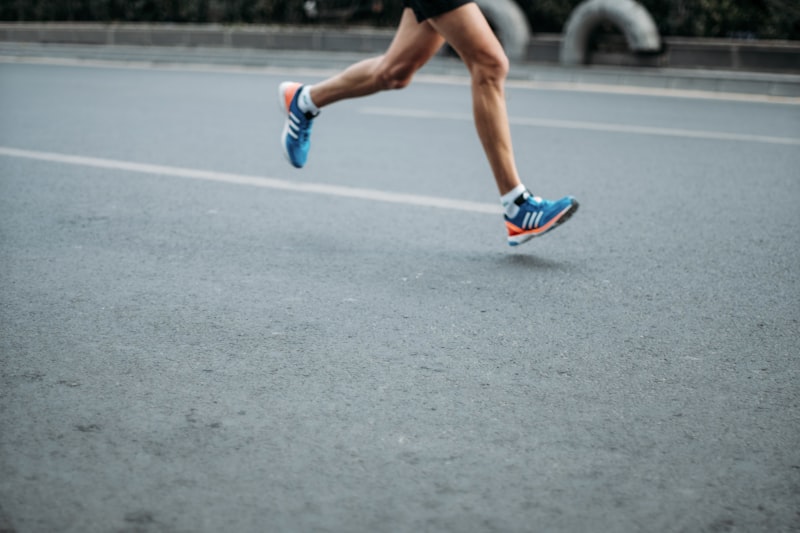
Silhouette Awareness
You are not just a runner in the dark -- you are a silhouette. Understanding how others perceive your shape and movement is a visibility skill most runners never think about.
Backlighting Effect
When a light source is behind you, drivers see only your dark outline. This is when you are least visible. Position yourself so streetlights are beside or ahead of you whenever possible.
Color Contrast
Dark clothing against a dark background makes you invisible. Wear white, neon yellow, or bright orange on your upper body. Even without reflective material, high-contrast colors are visible at 3x the distance of dark clothing.
Motion vs Stillness
A moving runner is easier to spot than a stationary one. If you stop at an intersection, keep shifting your weight or raise an arm to maintain motion visibility. Never stand motionless at a dark crossing.
360-Degree Coverage
Visibility is not just about the front. Drivers approach from behind, cyclists from the side, and vehicles from cross-streets. Your visibility strategy must cover all angles -- front, back, and sides.
High-Contrast Placement
The goal is not to cover yourself in reflective material from head to toe. The goal is strategic placement that creates maximum contrast with minimum gear.
Think of your body as having four visibility zones: head/chest (front-facing), back/shoulders (rear-facing), arms/wrists (lateral motion), and legs/ankles (ground-level motion). Cover at least three of these four zones for complete night visibility.
Visual Presence Tips
Answers to the most common visibility questions.
Explore All Pillars
Route Intelligence
Light density, loop design, exit points, timing strategy.
Visual Presence
You are here
Situational Awareness
Scanning rhythm, headphone protocol, pace modulation.
Emotional Resilience
Hypervigilance fatigue, breath resets, first-night confidence.
Community Safety
Buddy systems, route sharing, trusted route networks.
Light Up Your Night Run
Build a route with our Night Route Builder that factors in lighting conditions, or join the Night Crew for gear recommendations and community wisdom on visibility strategy.